
Data stays inside the organisation
IntelliPA runs on the workstation on site. Documents, requests and answers never leave the organisation and no text goes to the cloud.
Data stays inside the organisation, the signature stays with the RUP and compliance reads in one place.
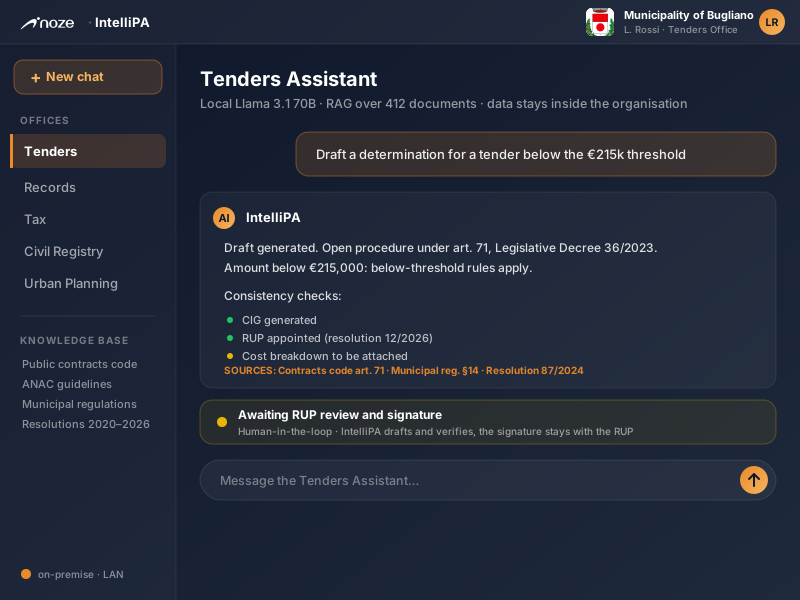
IntelliPA runs on the workstation on site. Documents, requests and answers never leave the organisation and no text goes to the cloud.
IntelliPA prepares and verifies. The RUP (the officer responsible for the procedure) or the manager decides, signs and takes responsibility for the act.
The open-weight LLMs run locally. The organisation’s documents serve to answer your requests, not to train shared models.
Applicability of the AI Act, GDPR, NIS2, CRA and DORA, register health, open deadlines and incidents. It exports as PDF or DOCX for management.
It cross-references the five regulations on their shared requirements. A person confirms a gap and turns it into an action with an owner and a deadline.
Every piece of register evidence links to the document it comes from. The signature stays with the DPO, the NIS2 point of contact or the manager.
Models and packs in use, intended uses, allowed outbound destinations, accessibility and governance, on one page of the Console.
Each installation computes its own OISG score from 0 to 100 and issues a self-assessment PDF certificate with a verification code.
No. IntelliPA runs on the workstation on site: documents, requests and answers stay inside the organisation.
No. The organisation’s documents serve to answer requests, not to train shared models.
No. Signature, registration and responsibility for the act stay with the RUP or the manager. Automatic agents, too, only propose.
Not for daily work. The connection is used for updates of models and regulations, agreed with the organisation.
Through MePA, as a single project covering hardware, software, setup and support. The licence is annual per office.
It depends on the category. Among local administrations, Legislative Decree 138/2024 includes metropolitan cities, municipalities above 100,000 residents, regional capitals and local health authorities.
For high-risk systems, Article 27 requires a fundamental rights impact assessment before use. With the digital omnibus on AI the obligation applies from 2 December 2027.
No, it is a self-assessment. Most points are measured automatically on the installation, the others are attested by the organisation’s designated contact, and the certificate tells them apart.