
Article
From internal tool to open project
On 28 January 2025, Block — the company led by Jack Dorsey, formerly known as Square — released Goose as Open Source: a desktop agent developed internally for its own developer tooling. The chosen licence is Apache 2.0, the same adopted for other open projects in the ecosystem. Goose was born inside Block as a tool to automate development tasks and was published after an internal adoption phase mature enough to justify external distribution.
Architecture
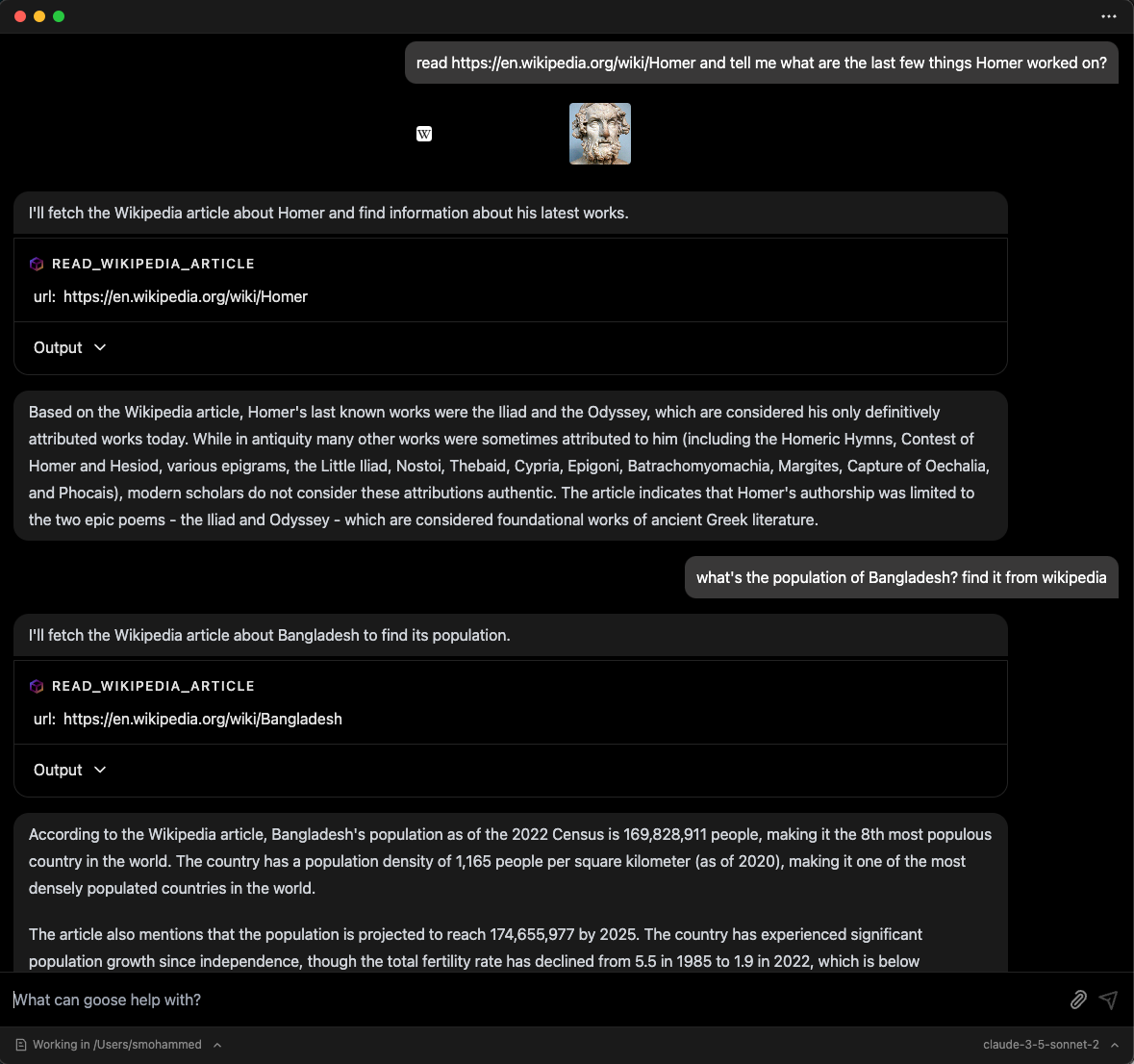
Goose is a native desktop application with a Rust backend and a React frontend, packaged as a standalone binary for macOS, Linux and Windows. The agent runs locally on the user’s machine and communicates with LLMs both locally (through runtimes like Ollama) and in the cloud (OpenAI, Anthropic, Google and other configurable providers).
Goose’s distinguishing trait is native integration of the Model Context Protocol (MCP), the standard proposed by Anthropic at the end of 2024 for interoperability between agents and external tools. Goose does not reimplement a proprietary plugin system: connecting any MCP server (file system, browser, database, third-party APIs) automatically grants the agent the capabilities exposed by that server.
Sessions and persistence
Goose maintains persistent session management: every conversation with the agent is an identifiable session, saved locally, resumable and inspectable. This behaviour allows complex multi-step tasks to be resumed and context to be preserved without manually reloading it on each invocation.
Positioning
Prior internal adoption by Block and strict adherence to MCP position Goose as one of the first Open Source desktop agents natively conceived for the emerging ecosystem of open protocols, rather than for ad-hoc integrations with specific providers. For organisations that want a local, auditable, protocol-open agent, Goose represents a concrete starting point.
Link: block.github.io/goose