
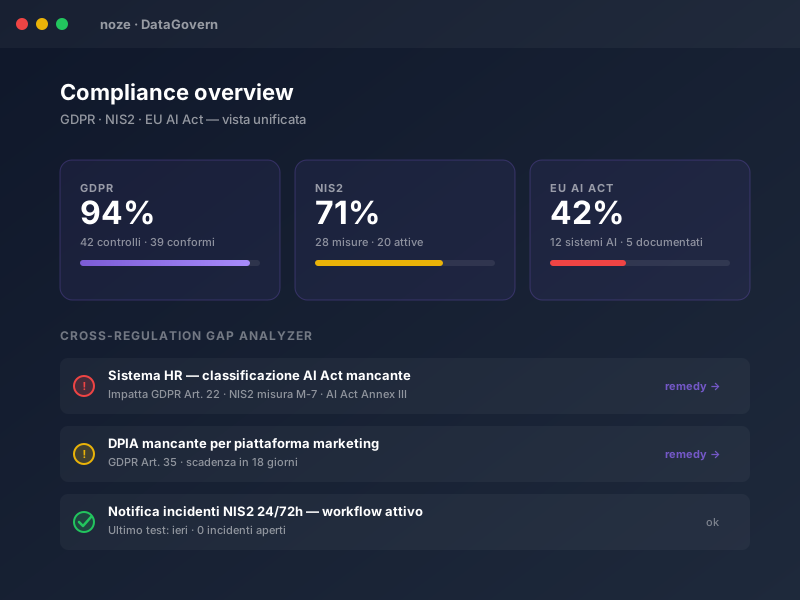
DataGovern
Integrated on-premise compliance platform. GDPR + NIS2 + EU AI Act in a single tool.
Discover DataGovern →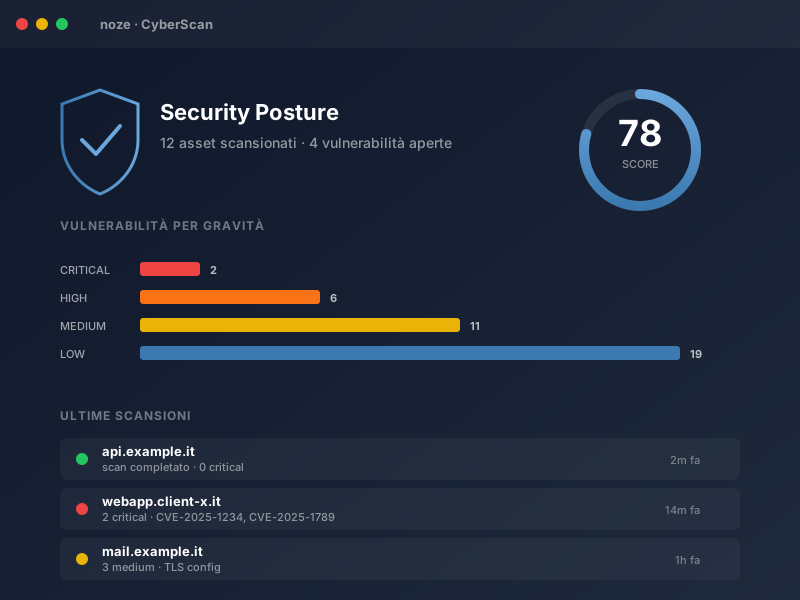
CyberScan
Continuous vulnerability assessment for NIS2 compliance. Asset discovery and automated pentesting.
Discover CyberScan →Admina Enterprise
Open AI governance. Audit trail, PII redaction, bidirectional policies — AI Act native.
Discover Admina Enterprise →
Innovation Management
Realistic AI roadmaps: prioritisation, change management, buy/build/partner decisions.
Discover →The cost of non-compliance
The Ponemon Institute / GlobalScape benchmark study established a figure that still holds: the average cost of non-compliance is USD 14.82 million, versus USD 5.47 million for a structured compliance programme. Non-compliance costs 2.71 times more than investing in conformity.
With new European regulations, the gap widens further:
- NIS2: fines up to EUR 10 million or 2% of global turnover, with personal liability for management
- EU AI Act: up to 7% of global turnover for prohibited AI practices
- GDPR: cumulative fines exceeding EUR 4.5 billion since 2018
An unsustainable regulatory volume without automation
The Thomson Reuters Cost of Compliance Report 2024 records an average of 257 regulatory alerts per day — roughly 90,000 per year — that organisations must monitor. The pace of regulatory change outstrips the growth of compliance teams, which average 20-50 FTEs in mid-to-large organisations.
Yet most organisations have automated only 10-20% of their compliance processes (McKinsey). The room for improvement is vast: KPMG estimates that up to 70% of monitoring and testing activities can be partially or fully automated.
The GRC and RegTech market
The GRC (Governance, Risk, Compliance) market is estimated at USD 54 billion in 2024, growing towards USD 100 billion by 2032 (CAGR ~13%, Fortune Business Insights).
The RegTech segment is growing even faster: from USD 12-16 billion in 2024 to a projected USD 40-55 billion by 2032 (CAGR ~22%, MarketsAndMarkets). Venture funding in the sector grew by 30%+ year on year in 2023-2024 (BCG).
What a Compliance Manager can do today
- Unify compliance: GDPR, NIS2 and AI Act share requirements (risk management, incident reporting, documentation). Managing them together reduces incremental costs to 10-15% instead of 40-60% in silos.
- Automate monitoring and reporting: 30-40% reduction in manual effort (Deloitte, 2024).
- Produce board-ready reports: the board wants comprehensible metrics, not technical tool screenshots.
- Inventory AI systems: the AI Act requires it, and the deadline is August 2026.
Sources: Ponemon Institute / GlobalScape “True Cost of Compliance”, Thomson Reuters Cost of Compliance Report 2024, Fortune Business Insights GRC Market Report, MarketsAndMarkets RegTech Market Report, McKinsey, KPMG, Deloitte, BCG.