
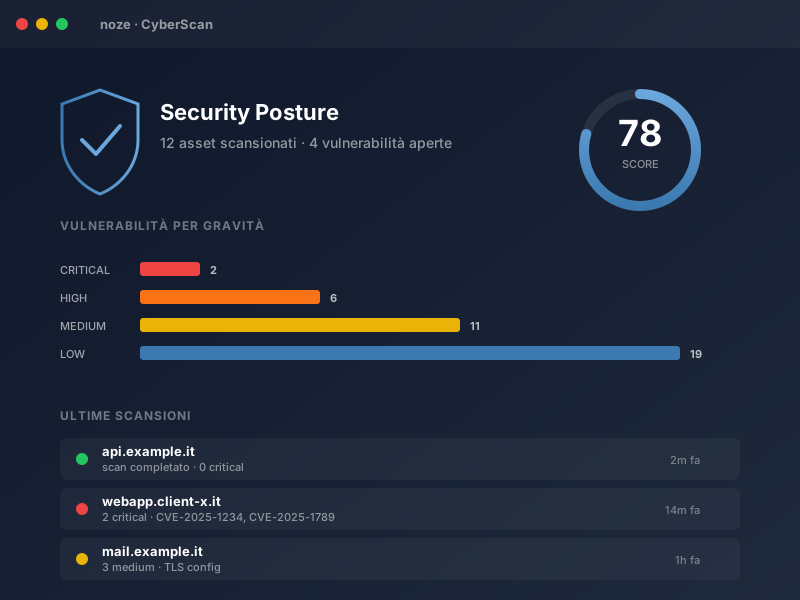
CyberScan
Automated vulnerability assessment and pentesting. Continuous asset discovery, AI risk prioritisation, built-in NIS2 compliance manager.
Discover CyberScan →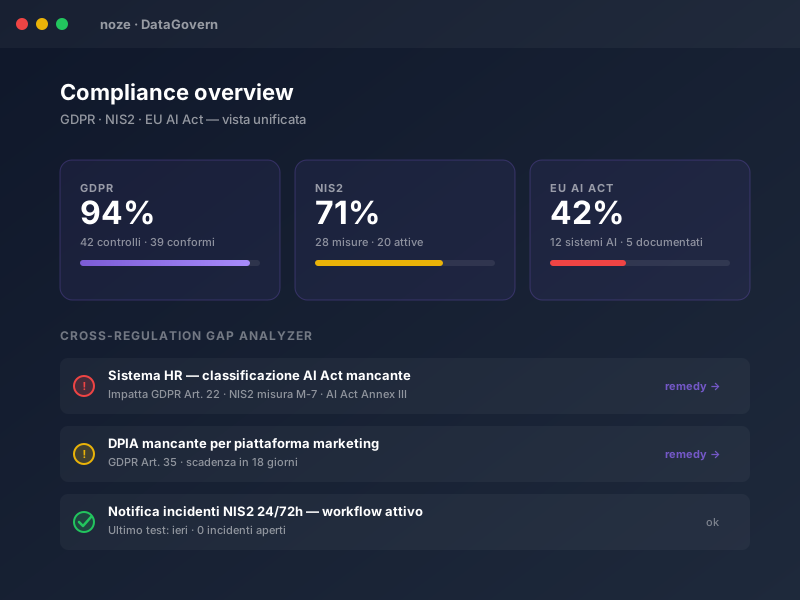
DataGovern
Integrated compliance platform for GDPR + NIS2 + EU AI Act. Cross-Regulation Gap analysis, board-ready dashboard, fully on-premise.
Discover DataGovern →Admina Enterprise
Open AI governance: PII redaction, audit trail, bidirectional policies. NIS2 and AI Act compliant.
Discover Admina Enterprise →
Cyber Security
CISO-as-a-service consulting: posture definition, remediation roadmap, ongoing support.
Discover →The problem: costly breaches and overloaded teams
According to the IBM Cost of a Data Breach Report 2024, the average breach cost hit a record USD 4.88 million globally, up 10% from the previous year. In Europe the figure is compounded by the regulatory pressure of NIS2 (fines up to EUR 10 million or 2% of global turnover for essential entities).
The Verizon DBIR 2025 shows that vulnerability exploitation now accounts for 20% of all breaches as an initial access vector, up 34% year on year. Yet, according to a Ponemon / ServiceNow study, 60% of breached organisations were compromised through known vulnerabilities for which a patch already existed.
The talent gap makes things worse: the ISC2 Cybersecurity Workforce Study 2024 reports 4.8 million unfilled positions worldwide, and 63% of CISOs experienced burnout in the past year (Proofpoint, Voice of the CISO 2025).
The economic impact of automation
The same IBM report shows that organisations with extensive AI and automation in prevention workflows save USD 2.2 million per breach and identify and contain incidents roughly 100 days faster than those without.
The vulnerability management market, estimated at USD 17.67 billion in 2025 (Precedence Research), is growing at a CAGR of 6.8%: the industry is moving towards automation because it works.
In percentage terms, a structured programme of automated vulnerability assessment + recurring pentesting can reduce the expected cost of an incident by 35-45%, considering reduced detection time (from 267 to 148 days), continuous coverage, and AI-based risk prioritisation.
What a CISO can do today
- Map the assets: you cannot protect what you do not know. A continuously updated inventory is essential.
- Automate scanning: recurring vulnerability assessment, not a one-off exercise.
- Prioritise with AI: not every CVE is equal. Contextual risk scoring is needed.
- Integrate compliance: NIS2 requires demonstrability. Reports must be board-ready.
Sources: IBM Cost of a Data Breach Report 2024, Verizon DBIR 2025, Ponemon/ServiceNow Vulnerability Survey, ISC2 Cybersecurity Workforce Study 2024, Proofpoint Voice of the CISO 2025, Precedence Research.